Assistant Professor · UPES University, Dehradun

Mohd Sakib

Ph.D. in Computer Science · School of Computer Science, UPES University

I build decomposition-driven and ensemble deep learning models for time series that are nonlinear and non-stationary. My work spans energy demand, smart grids, sensor systems, and epidemiological forecasting, with a growing focus on explainable and foundation-model approaches.

Ensemble Deep Learning Time-Series Forecasting Explainable AI Predictive Analytics
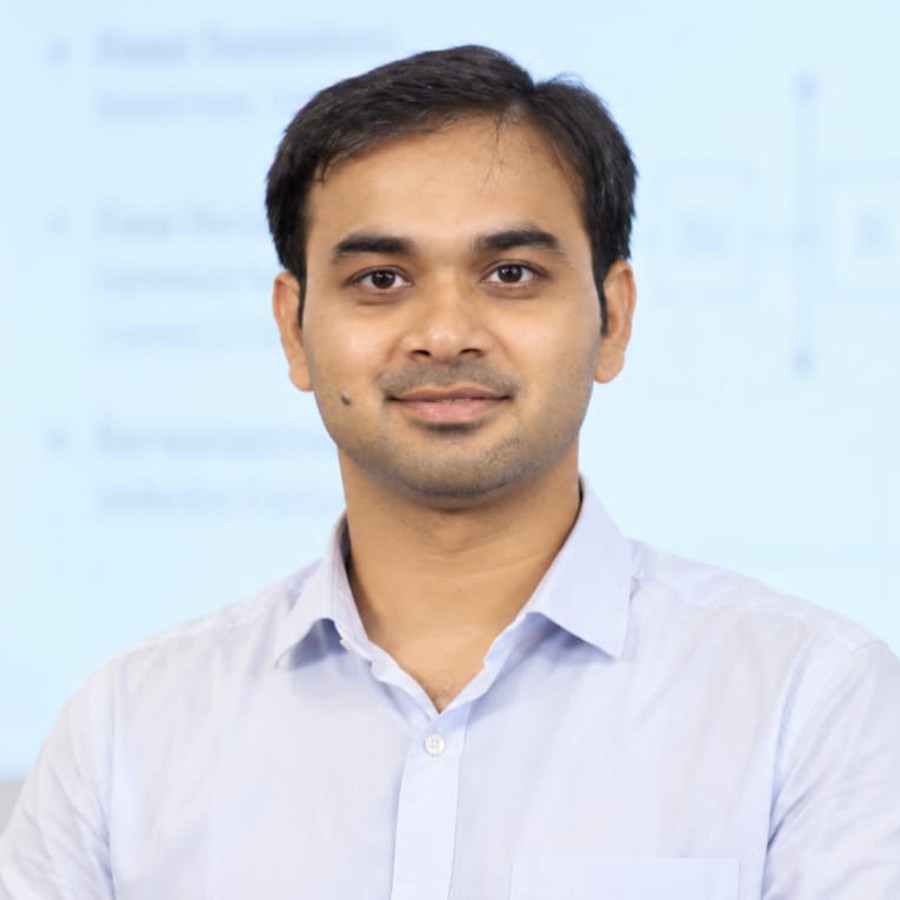
Portrait of Dr. Mohd Sakib
4 Q1 ArticlesSCIE-indexed journals
PIE-Vision, funded project
0CitationsGoogle Scholar
0h-indexGoogle Scholar
0SCIE ArticlesFour in Q1
0Edited VolumesIGI Global
0IP FilingsTwo granted
0Journals ReviewedElsevier, Springer, Nature

Bibliometric indicators as of September 2026.

About

A researcher working where deep learning meets time

I am a computer scientist working at the intersection of deep learning and time-series analysis. I completed my Ph.D. at Aligarh Muslim University in 2024 and have more than five years of research experience.

My contributions center on decomposition-driven and ensemble deep learning architectures for nonlinear, non-stationary temporal dynamics. I apply them to energy demand, smart grids, and epidemiological surveillance. That work has appeared in five SCIE-indexed journals, four of them Q1, alongside IEEE conference proceedings and book chapters with CRC Press and IGI Global.

I co-edited two published IGI Global volumes, with further volumes under proposal at CRC Press and Elsevier, and a single-authored graduate textbook in preparation. I serve as Principal Investigator on an externally funded assistive-technology project that has produced granted registered designs in the United Kingdom and India. I review for eight international journals and supervise undergraduate and postgraduate researchers through to peer-reviewed publication.

CEEMDAN & STL Decomposition Transformer Architectures LSTM / BiLSTM / TCN Genetic Algorithms Grey Wolf Optimizer Bayesian Optimization Anomaly Detection Smart Grids & Energy Epidemiological Forecasting

Education

  1. Apr 2021 – Dec 2024 Ph.D. in Computer Science Aligarh Muslim University, Aligarh, India

    Thesis: An Efficient Ensemble Deep Learning Model for Estimation and Forecasting of Time Series Data. Supervisor: Prof. Suhel Mustajab.

  2. Jul 2015 – Dec 2018 Master of Computer Applications Aligarh Muslim University · CGPA 7.93/10
  3. Jun 2012 – Jul 2015 Bachelor of Computer Applications Aligarh Muslim University · 75.6%

Appointments

  1. Jun 2025 – Present Assistant Professor School of Computer Science, UPES University, Dehradun
  2. Aug 2024 – Jun 2025 Assistant Professor Department of Computer Applications, MITS Deemed to be University, Madanapalle

Research

Three lines of work

From the doctoral programme on ensemble forecasting, to a current transformer framework for multi-domain time series, to applied assistive technology built with students and industry.

Current

E3-TSF: Dynamic Gating Ensemble Transformers

A Dynamic Gating Ensemble Transformer Framework for Multi-Domain Time Series Forecasting

A context-aware ensemble transformer that unifies temporal patch learning with variable-wise interdependence modelling inside a dynamic gating framework. A learnable gating network allocates weights between complementary transformer backbones according to local series characteristics such as trend behaviour, volatility, and cross-variable interaction.

The framework is evaluated across heterogeneous domains: energy (ETTh1), traffic (METR-LA), finance (Exchange Rate), and epidemiological forecasting (ILI), with consistent gains over standalone transformers and static ensembles.

  • Under review at Scientific Reports (Nature Portfolio)
  • Four benchmark domains, multiple forecast horizons
Doctoral

Ensemble Deep Learning for Estimation and Forecasting

Ph.D. programme, Aligarh Muslim University, 2021–2024

Led the programme end to end, from problem formulation through model design, implementation, experimental evaluation, and manuscript preparation.

  • A decomposition-driven hybrid framework integrating CEEMDAN with deep temporal convolution and sequence learning
  • A VAR–LSTM fusion model combining vector autoregression with deep sequence modelling for multivariate series
  • A genetic-algorithm-optimized ensemble for dynamic feature selection under volatile conditions
  • Attention mechanisms, autoencoder sequence modelling, and hierarchical structures for long-term dependencies
Applied

E-Vision: Assistive AI for the Visually Impaired

Principal Investigator, externally funded, 2025–

An intelligent assistive application for visually impaired users, funded by Cadre Tech Innovative Solutions LLC and hosted at the School of Computer Science, UPES University.

  • UK Registered Design No. 6538179, granted 16 July 2026
  • Indian Registered Design No. 510366-001, registered 22 July 2026
  • A related TinyML keyword-spotting design is under examination in the UK

Publications

Selected and complete record

Six journal articles, four IEEE conference papers, two book chapters, and two edited volumes, with further work accepted or under review. Every entry links to its DOI where one has been issued.

  1. 2025

    CEEMDAN-TCN-AutoLSTM: A Triple-Force Ensemble Using Cross-Stitch Networks for Short-Term Load Forecasting

    Sakib, M., & Mustajab, S.

    Arabian Journal for Science and Engineering

    SCIEQ1IF 2.9Scopus
    10.1007/s13369-025-10398-1
  2. 2025

    Ensemble deep learning techniques for time series analysis: a comprehensive review, applications, open issues, challenges, and future directions

    Sakib, M., Mustajab, S., & Alam, M.

    Cluster Computing, 28(1)

    SCIEQ1IF 3.6Scopus
    10.1007/s10586-024-04684-0
  3. 2025

    An ensemble deep learning framework for energy demand forecasting using genetic algorithm-based feature selection

    Sakib, M., Siddiqui, T., Mustajab, S., Alotaibi, R. M., Alshareef, N. M., & Khan, M. Z.

    PLoS One, 20(1)

    SCIEQ1IF 3.7Scopus
    10.1371/journal.pone.0310465
  4. 2025

    Optimizing support vector regression using grey wolf optimizer for enhancing energy efficiency and building prototype architecture

    Sakib, M., Ahmad, S., Anwar, K., & Saqib, M.

    Cluster Computing, 28(1), 60

    SCIEQ1IF 3.6Scopus
    10.1007/s10586-024-04802-y
  5. 2024

    Enhanced multi-variate time series prediction through statistical-deep learning integration: the VAR-stacked LSTM model

    Sakib, M., & Mustajab, S.

    SN Computer Science, 5(5), 573

    Scopus
    10.1007/s42979-024-02950-x
  6. 2023

    Multi-network-based ensemble deep learning model to forecast Ross River virus outbreak in Australia

    Sakib, M., & Siddiqui, T.

    International Journal of Pattern Recognition and Artificial Intelligence, 37(10)

    SCIEQ3IF 1.5Scopus
    10.1142/S0218001423520158
  7. 2026

    Long-horizon forecasting for sensor systems: an experimental study using linear and transformer-based models

    Khan, M., Sakib, M., Siddiqui, T., & Awasthi, S.

    2026 Second International Conference on Emerging Computational Intelligence (ICECI), pp. 1–6, IEEE

    IEEEScopus
    10.1109/ICECI69159.2026.11519399
  8. 2024

    BiLSTM-based approach for energy demand forecasting and synchronization among smart grids

    Sakib, M., Mustajab, S., Anwar, K., & Alam, M.

    2024 IEEE Third International Conference on Power Electronics, Intelligent Control and Energy Systems (ICPEICES), pp. 969–974

    IEEEScopus
    10.1109/ICPEICES62430.2024.10719085
  9. 2023

    Deep learning-based heartbeat classification of 12-lead ECG time series signal

    Sakib, M., Mustajab, S., & Siddiqui, T.

    2023 4th International Conference on Data Analytics for Business and Industry (ICDABI), pp. 273–278, IEEE

    IEEEScopus
    10.1109/ICDABI60145.2023.10629531
  10. 2023

    Anomaly detection of ECG time series signal using autoencoders neural network

    Sakib, M., & Siddiqui, T.

    2023 7th International Conference on Computing, Communication, Control and Automation (ICCUBEA), pp. 1–7, IEEE

    IEEEScopus
    10.1109/ICCUBEA58933.2023.10392094
  11. 2025

    Mitigating adversarial attacks in industrial cybersecurity through NLP strategies for e-commerce: challenges and emerging trends

    Suganya, S., Sakib, M., & Malini, M.

    Book chapter in AI-Driven Security and Intelligence in Cloud and Internet of Things Systems, IGI Global

    Book Chapter
    10.4018/979-8-3373-7503-8.ch003
  12. 2021

    Machine learning-based day-ahead market energy usage bidding for smart microgrids

    Saqib, M., Sahu, S. A., Sakib, M., & Al-Ammar, E. A.

    Book chapter in Electric Vehicle Integration in a Smart Microgrid Environment, pp. 249–266, CRC Press (Taylor & Francis)

    Book ChapterScopus
    10.1201/9780367423926-10
  13. 2025

    AI-Driven Security and Intelligence in Cloud and Internet of Things Systems

    Edited by Mohd Sakib, Muneer Khan, Shantanu Awasthi, & Mohd Vaseem Khan

    IGI Global · ISBN13 9798337375038

    Edited Volume
    10.4018/979-8-3373-7503-8
  14. 2025

    AI Advancements in Internet of Things, Smart Healthcare, and Intelligent Devices

    Edited by Muneer Khan, Shantanu Awasthi, Mohd Sakib, & Mohd Vaseem Khan

    IGI Global · ISBN13 9798337357270

    Edited Volume
    10.4018/979-8-3373-5727-0
  15. 2026

    E3-TSF: A dynamic gated multi-expert transformer framework for robust multi-domain time series forecasting

    Sakib, M., Fazil, M., Qamar, S., & Khan, M.

    Scientific Reports (Nature Portfolio)

    Under Review
  16. 2026

    Artificial intelligence techniques for cybersecurity: a comprehensive systematic review of methods, applications, challenges, and research directions

    Singh, K., Agarawal, P., & Sakib, M.

    Journal of Information Security and Applications (Elsevier)

    Under Review
  17. 2026

    Explainable self-selecting ensemble deep learning for sustainable multi-domain forecasting

    Sakib, M., Khan, M., & Awasthi, S.

    5th Elsevier International Conference on Machine Learning & Data Engineering (ICMLDE 5.0), Dehradun, 27–28 November 2026. To appear in Procedia Computer Science

    AcceptedScopus
  18. 2026

    A hybrid soft computing framework for intelligent time-series forecasting using STL decomposition and Bayesian-optimized deep learning

    Sakib, M., & Khan, M.

    Book chapter in Soft Computing for Web Intelligence: Theory and Applications, CRC Press (Taylor & Francis)

    Accepted
  19. 2026

    Security-aware multi-view graph contrastive learning for network intrusion detection

    Ranjan, K., Garg, K., & Sakib, M.

    2026 International Conference on Advancement in Cyber Security and Digital Forensics (ICACSDF), UPES Dehradun, 11–12 September 2026

    Presented

Authored textbook in preparation

Foundation Models and the Structure of Time: An Independent Benchmark of Pretrained, Decomposition, and Ensemble Forecasting.

Single-authored graduate textbook, fifteen chapters across roughly 375 pages, with companion benchmark code and course materials. Proposal to be submitted to Oxford University Press.

Edited volumes in progress

Artificial Intelligence for Industry 5.0 Engineering Systems: Deep Learning, IoT, and Intelligent Automation. CRC Press (Taylor & Francis). Revised proposal submitted at the editors' request.

Intelligent IoT: AI-Driven Sensing, Connectivity, and Control. Elsevier. Eighteen commissioned chapters planned, proposal submitted.

Grants & Intellectual Property

Funded work and protected designs

Principal Investigator

E-Vision: An Intelligent Assistive Application for the Visually Impaired

Funded by Cadre Tech Innovative Solutions LLC, Delaware, USA, and hosted at the School of Computer Science, UPES University, Dehradun. The project has already produced two granted design registrations across two jurisdictions.

Sanctioned
INR 2,00,000
Awarded
September 2025
Reference
CT_US250102
Status
Approved for funding
Granted

UK Registered Design No. 6538179

AI Enabled Wearable Device for Blind Individuals

Registered 09 July 2026, granted 16 July 2026. Locarno Class 16, Subclass 06 (Optical Articles).

Proprietors: Muneer Khan, Mohd Sakib, Vinay Rishiwal.

Registered

Indian Registered Design No. 510366-001

AI-Enabled Wearable Device for Visually Impaired Persons

Registered 22 July 2026. Certificate issued 03 September 2026 by the Patent Office, Government of India under the Designs Act, 2000.

Proprietors: Muneer Khan, Mohd Sakib, Ashutosh Kumar Bhatt.

Under examination

UK Design Application No. 6545206

A Low-Power On-Device Keyword-Spotting System for AI-Powered Patient Assistance Using TinyML

Filed 07 August 2026.

Applicants: Muneer Khan, Mohd Sakib, Mridul Pandey, Rajeev Kumar, Vinay Rishiwal.

Under filing

ChronoAnom-X

Explainable Temporal Intelligence Software for Time-Series Anomaly Discovery

Software copyright filed through the Intellectual Property Rights cell, UPES University. Built in Python with pandas, NumPy, scikit-learn, statsmodels, and Matplotlib.

Authors: Mohd Sakib, Muneer Khan.

Teaching & Supervision

Students first, publications with them

Supervision & mentoring

  • Supervise undergraduate and postgraduate research at UPES University, previously at MITS, from problem formulation and experimental design through to peer-reviewed publication. Four student researchers have co-authored papers accepted or under review at international venues.
  • Guided Kushagra Ranjan and Kavya Garg on multi-view graph contrastive learning for network intrusion detection. The resulting paper was presented at ICACSDF 2026.
  • Guided Krishnanand Singh and Pratik Agarawal on a systematic review of AI techniques for cybersecurity, now under review at Journal of Information Security and Applications.
  • Mentor student teams in reproducible experimental practice, scientific writing, and responding to peer review.

Courses taught

  • Statistics and AnalysisB.Tech. 6th Sem, 2026
  • Data Structures and AlgorithmsB.Tech. 2nd Sem, 2026
  • Linux LaboratoryB.Tech. 1st Sem, 2025
  • Design and Analysis of AlgorithmsB.Sc. 3rd Sem, 2025
  • Artificial Intelligence, Theory & LabMCA 2nd Sem, 2025
  • Deep LearningMCA 3rd Sem, 2024
  • Database Management Systems LabMCA 1st Sem, 2024
  • Data Structures and Algorithms, Theory & LabMCA 1st Sem, 2024

Two appreciation letters from the Head of Department at MITS for excellence in teaching, with student feedback of 4.70/5 and 4.77/5 in 2024–25.

Awards & Service

Recognition and peer review

Achievements & awards

  • Qualified the UGC NET examination in Computer Science twice, December 2018 and December 2019.
  • Member, IEEE and IEEE Computer Society. Life Member, Indian Society for Technical Education since 2025.
  • UGC Non-NET Fellowship throughout the Ph.D. programme, and a University Merit Scholarship in 2017–2018.
  • Springer Nature reviewer certificates for eleven manuscripts in 2026: Scientific Reports (3), Cluster Computing (4), Signal, Image and Video Processing (2), Journal of Big Data (1), Discover Artificial Intelligence (1).
  • Certificates of appreciation as Reviewer and Presenter, ICACSDF 2026, UPES, September 2026.
  • Jury Member, Smart India Hackathon 2026 internal round, UPES Dehradun, a Ministry of Education initiative.

Reviewing services

Journals

Computers in Biology and Medicine Scientific Reports Cluster Computing Signal, Image and Video Processing Electrical Engineering Journal of Big Data Discover Artificial Intelligence IJUFKS

Conferences

Technical Program Committee Member for ICIESTR-2024, IIRA 5.0, and ICECI 2026. Reviewer for CICTN-2025, ICDT-2025, and ICACSDF 2026.

Academic activities

  • Criterion In-Charge for National Board of Accreditation documentation and compliance.
  • Students' Holistic Activities Coordinator and AICTE-PARAKH Coordinator, MITS.
  • Co-Convenor and Organizer of two five-day Faculty Development Programmes on AI for problem solving and AI in cybersecurity.
  • Editorial Board Member and Technical Reviewer for Advancing Cybersecurity in Smart Factories Through Autonomous Robotic Defenses, IGI Global, February 2025.

Technical toolkit

Languages

Python, SQL

Deep learning

PyTorch, TensorFlow, Keras, Hugging Face Transformers

ML & scientific computing

scikit-learn, NumPy, pandas, SciPy, statsmodels

Time-series modelling

CEEMDAN/EEMD, STL, VAR, ARIMA, TCN, LSTM/BiLSTM, Transformers

Optimization

Genetic algorithms, Grey Wolf Optimizer, Bayesian optimization

Environment

MySQL, Git, LaTeX, Linux, Matplotlib

Contact

Open to collaboration

I welcome collaboration on time-series forecasting, ensemble and foundation models, and applied AI for energy, health, and assistive technology. Research students are welcome to write with a short note about their interests.

Get in touch

References

  • Prof. Tamanna SiddiquiProfessor, Department of Computer Science, Aligarh Muslim Universityt.siddiqui.cs@amu.ac.in
  • Prof. Suhel MustajabProfessor, Department of Computer Science, Aligarh Muslim Universitys.mustajab.cs@amu.ac.in
  • Dr. Mohd FazilAssistant Professor, College of Computer and Information Sciences, Imam Mohammad Ibn Saud Islamic University, Riyadhmfazil@imamu.edu.sa